Hybrid Scaffolded Content Media Integration Discussion-Based

Design Approach

This case study focuses on a single week's lecture to illustrate how I structure content delivery within a learning unit. The example — Week 5, "Discrimination and New Racism" — demonstrates how historical context, theoretical frameworks, primary source evidence, and contemporary application can be sequenced to build toward critical analysis.

Pedagogical Arc

The lecture moves through five distinct phases, each building on the last. The progression is designed so that students encounter new theoretical concepts only after the historical groundwork makes them intelligible, and encounter discussion questions only after they've seen the theory applied to real data.
Lecture slide — Historical Foundation

Phase 1: Historical Foundation

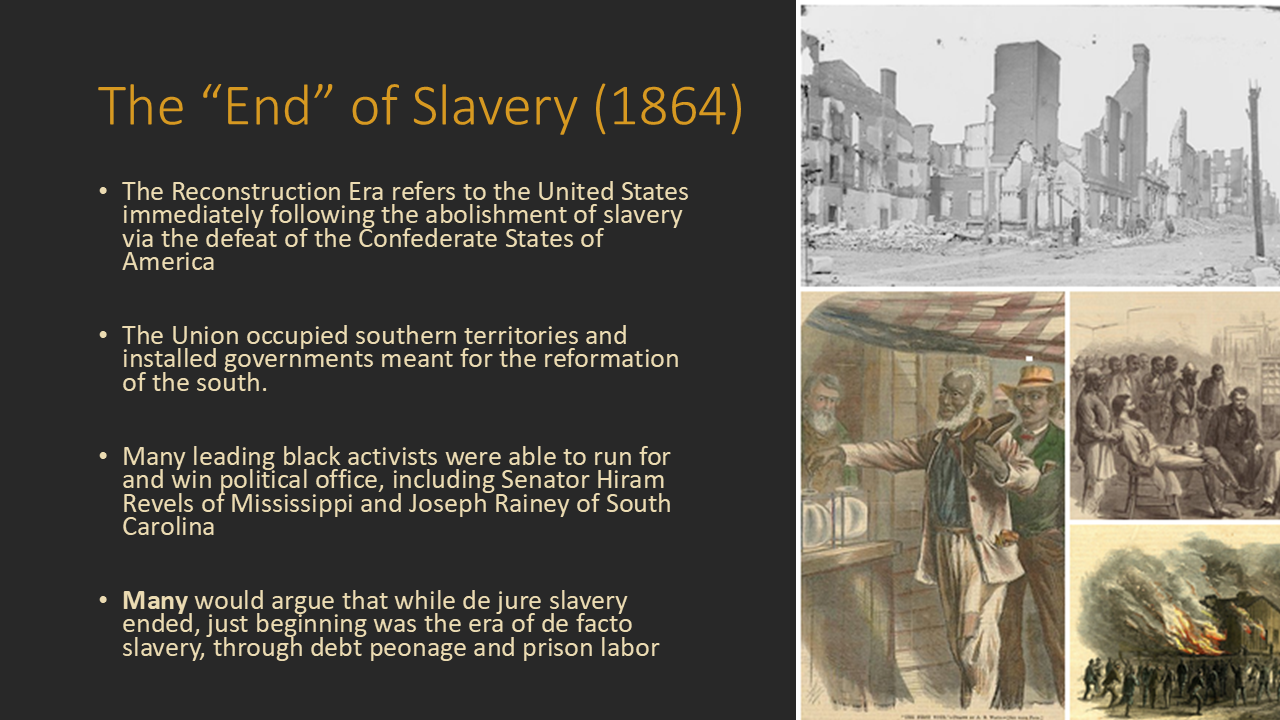
The lecture opens with a compressed history of racial discrimination from Reconstruction through the Civil Rights Movement. This isn't background for its own sake — it establishes the baseline of explicit, codified racism that the subsequent theoretical framework (color-blind racism) defines itself against. Students need to understand what "old" racism looked like before they can grasp what's "new" about its contemporary form.

Lecture slide — Theoretical Framework

Phase 2: Theoretical Framework

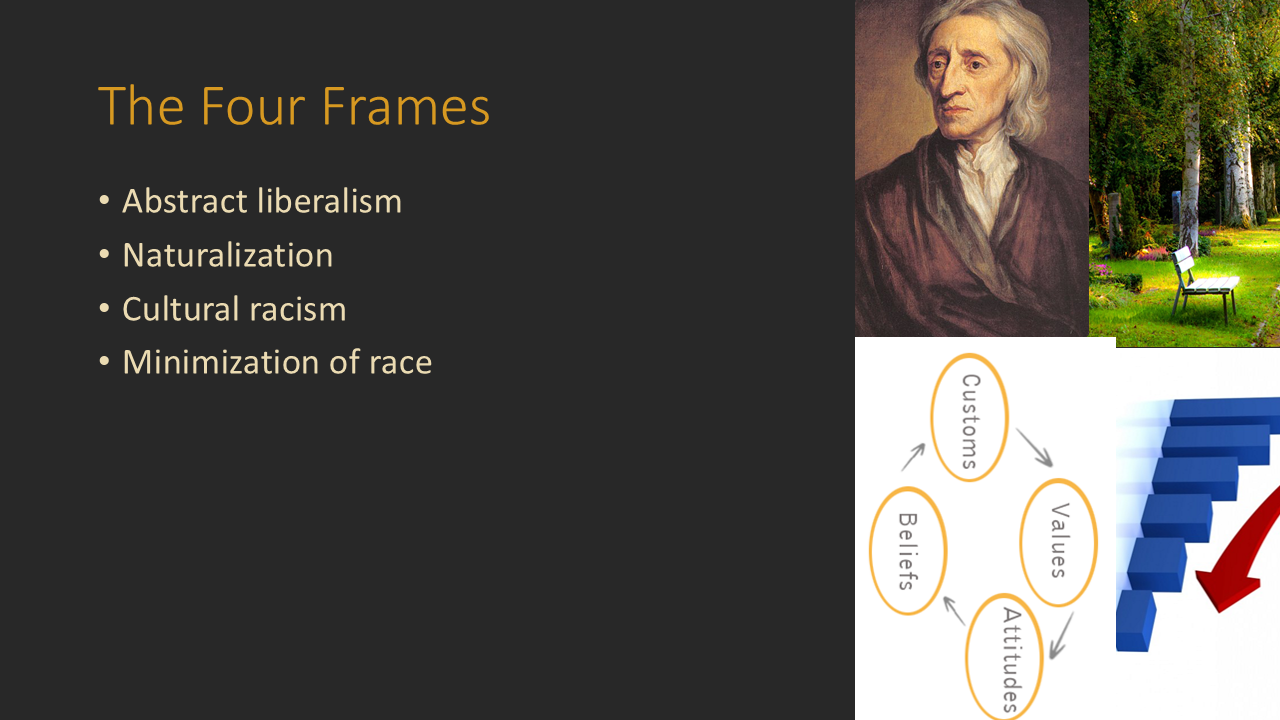
With the historical baseline established, the lecture introduces Eduardo Bonilla-Silva's theory of color-blind racism and its four frames: abstract liberalism, naturalization, cultural racism, and minimization. The concept of a "frame" is defined explicitly before the individual frames are presented — an example of front-loading vocabulary so students can process the typology without simultaneously decoding the terminology.

Lecture slide — Primary Source Application

Phase 3: Primary Source Application

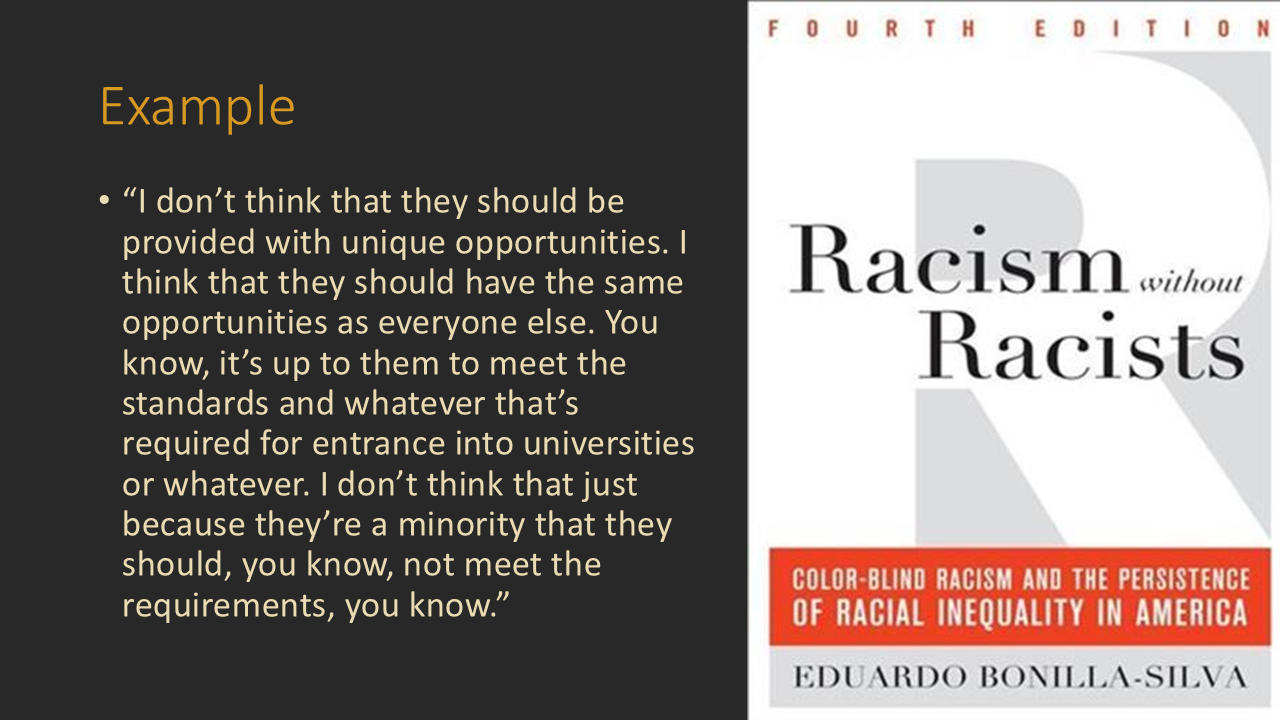
Each frame is illustrated with direct quotations from Bonilla-Silva's interview data — real people articulating real positions that exemplify the theoretical concept. This serves two purposes: it makes the abstract framework concrete, and it develops students' capacity to identify discursive patterns in naturalistic speech. The shift from textbook definition to primary source analysis mirrors the kind of interpretive work the course paper requires.

Lecture slide — Contemporary Application

Phase 4: Contemporary Application

The lecture then pivots to contemporary examples, asking whether the "new racism" framework still holds or whether recent political developments represent a resurgence of explicit racial ideology. This section deliberately complicates the theoretical framework just presented — pushing students beyond passive reception toward evaluating the theory's limits and applicability.

Lecture slide — Discussion Synthesis

Phase 5: Discussion Synthesis

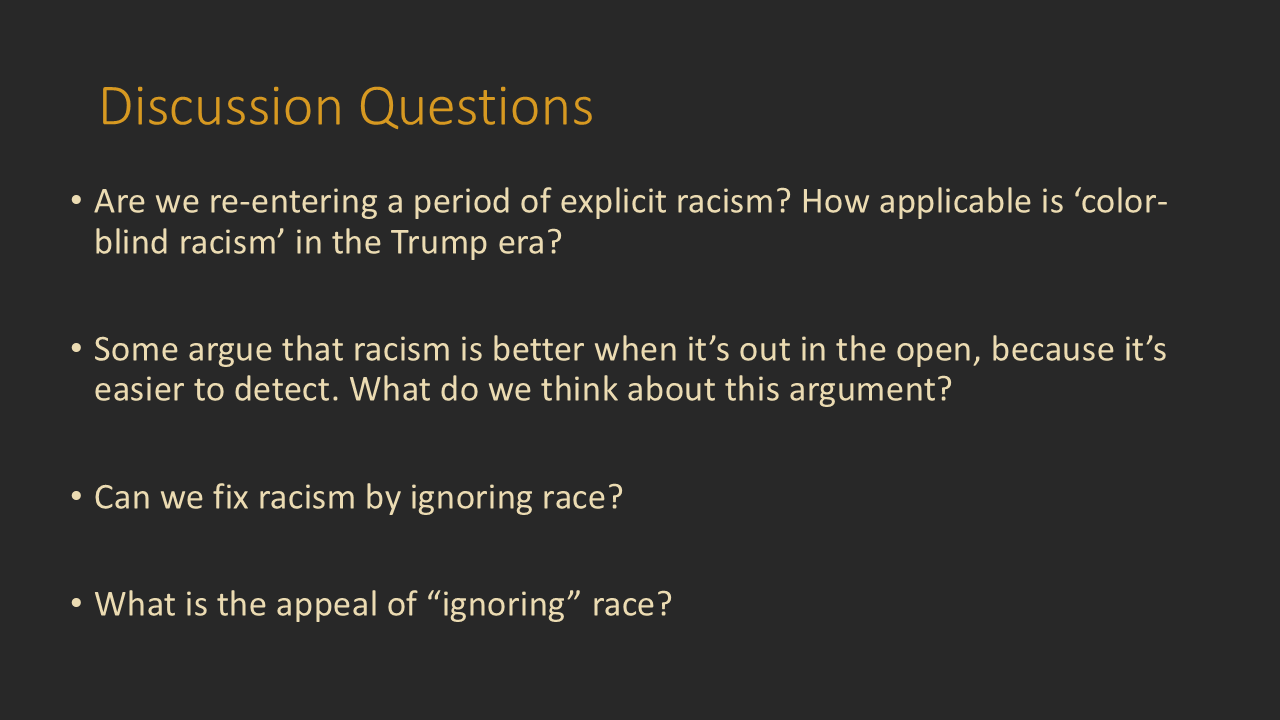
The closing discussion questions are designed to operate at different levels of analysis: some ask for application of the framework, others ask for evaluation of competing claims, and others probe underlying assumptions. This tiered approach ensures that students at different levels of readiness can engage productively.

Design Principle

Each lecture follows the same structural logic: establish context, introduce the analytical tool, demonstrate application with evidence, complicate the tool with new cases, and then hand the analysis to students via discussion. This consistent architecture means students can focus on the content rather than figuring out how the lecture works each week.